
Primary Keyword: Soft washing vs pressure washing for NJ roofs
Suggested SEO-Friendly URL Slug:
/soft-washing-vs-pressure-washing-for-nj-roofs/
Introduction
When dark streaks or algae appear, many homeowners ask the same question: soft washing vs pressure washing for NJ roofs—what’s better? In New Jersey, where humidity, rain, shade, and seasonal temperature changes accelerate roof buildup, choosing the wrong cleaning method can shorten your roof’s lifespan and lead to costly repairs.
While both methods are commonly advertised, they are not equally safe for roofs. In fact, roofing manufacturers and NJ exterior cleaning experts overwhelmingly recommend one method over the other. “Knowing the difference helps protect shingles, preserve warranties, and keep your roof looking its best.”
Why Roof Cleaning Is Necessary in New Jersey
NJ roofs face constant exposure to:
- High humidity that fuels algae growth
- Frequent rain that spreads stains
- Pollen, leaves, and debris
- Freeze-thaw cycles that weaken shingles
Those black streaks on roofs are usually algae—not dirt—and they don’t disappear on their own. Without proper cleaning, algae holds moisture against shingles, accelerating wear and reducing roof life.
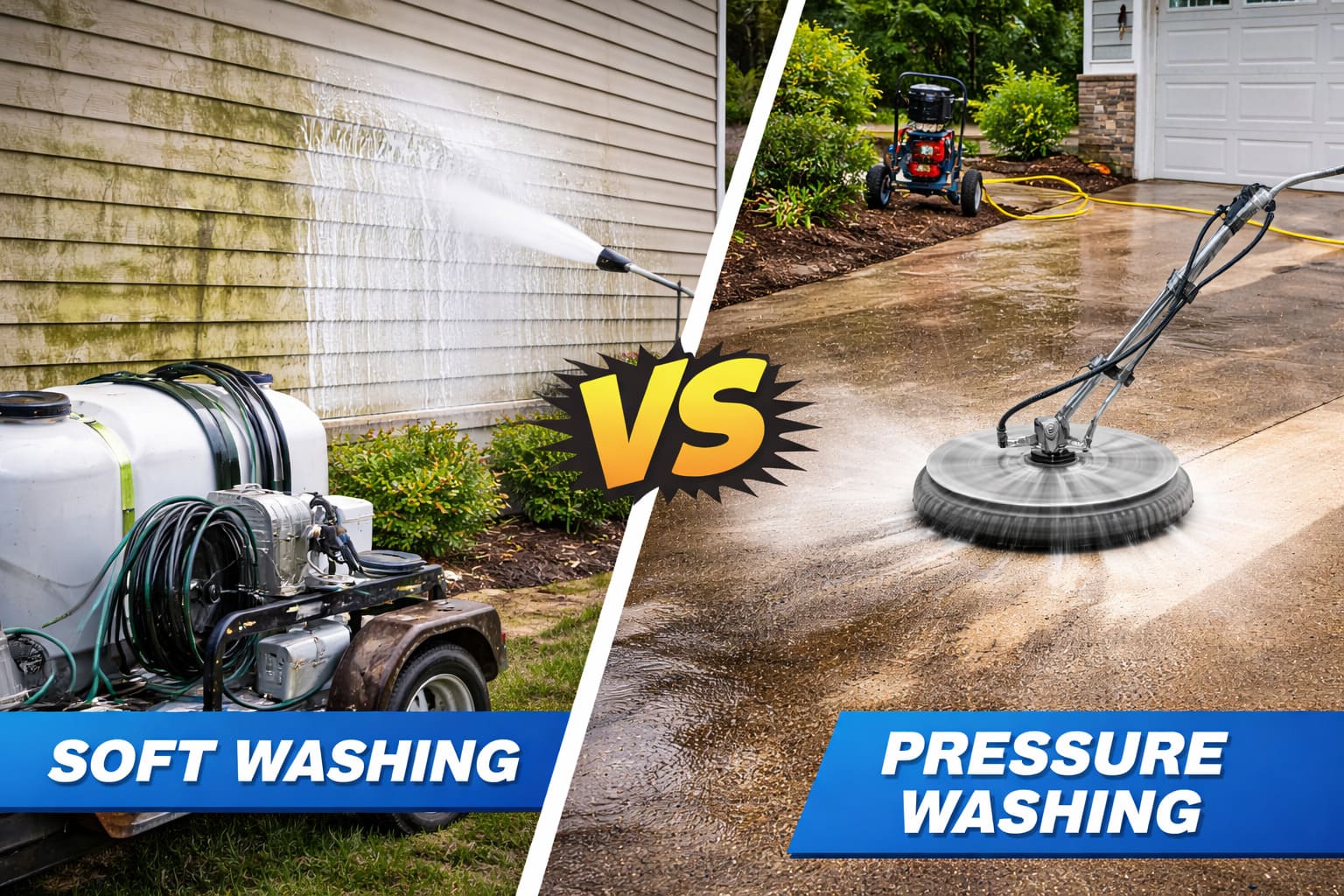
What Is Pressure Washing?
Pressure washing uses highly pressurized water to blast away dirt and stains. While effective on hard surfaces like concrete, it is rarely appropriate for roofs.
Risks of Pressure Washing NJ Roofs
- Strips protective granules from asphalt shingles
- Forces water underneath shingles, causing leaks
- Weakens older or weathered roofing materials
- Voids many shingle manufacturer warranties
- Shortens roof lifespan
Although pressure washing may make a roof look clean temporarily, it does not kill algae at the root, meaning stains often return quickly—sometimes worse than before.
What Is Soft Washing?
Soft washing is a roof-safe cleaning method specifically designed for delicate surfaces.
How Soft Washing Works
Soft washing uses:
- Low-pressure water (similar to a garden hose)
- Specialized, biodegradable cleaning solutions
- Longer dwell time to break down algae, moss, and lichen
Instead of blasting growth off the roof, soft washing kills organic growth at the source, allowing stains to fade naturally and preventing rapid regrowth.
Soft Washing vs Pressure Washing for NJ Roofs: Key Differences
Safety
- Pressure Washing: High risk of shingle damage
- Soft Washing: Safe for asphalt shingles when done professionally
Effectiveness
- Pressure Washing: Removes surface stains only
- Soft Washing: Eliminates algae, moss, and lichen at the root
Longevity
- Pressure Washing: Stains often return quickly
- Soft Washing: Roof stays cleaner for 2–3 years on average
Manufacturer Recommendations
- Pressure Washing: Often discouraged
- Soft Washing: Industry-recommended method
Why Soft Washing Is the Preferred Method in New Jersey
NJ’s climate makes proper technique especially important.
High Humidity
Moisture encourages algae regrowth. Soft washing neutralizes spores, while pressure washing does not.
Seasonal Weather Extremes
Freeze-thaw cycles make shingles more vulnerable. High pressure can worsen existing weaknesses.
Older Roofs
Many NJ homes have roofs over 10–15 years old. Soft washing protects aging shingles rather than stressing them further.
For these reasons, most reputable NJ roof cleaning companies rely on soft washing exclusively.
When (If Ever) Is Pressure Washing Appropriate?
Pressure washing may be used on certain non-roof surfaces, such as:
- Concrete driveways
- Sidewalks
- Stone patios
It should never be used directly on asphalt shingles, especially on residential homes.
How Often Should NJ Roofs Be Soft Washed?
For most New Jersey homes:
- Every 2–3 years is ideal
- More frequently for shaded or tree-covered roofs
- Earlier cleaning if black streaks or moss are visible
Preventative soft washing costs far less than premature roof replacement.
DIY Roof Cleaning vs Professional Soft Washing
Roof cleaning is not a DIY-friendly task.
DIY Risks
- Falls and serious injury
- Improper chemical use
- Shingle damage from incorrect methods
- Incomplete algae removal
Professional soft washing services use:
- Roof-safe solutions
- Proper safety equipment
- Proven techniques
- Experience with NJ roof types and conditions
Frequently Asked Questions (FAQ)
Is soft washing safe for asphalt shingles?
Yes. Soft washing is the safest and most recommended method for asphalt shingle roofs.
Will soft washing remove black streaks completely?
In most cases, yes. It kills algae at the root, allowing stains to fade and slowing regrowth.
Can pressure washing void my roof warranty?
Yes. Many manufacturers warn against high-pressure roof cleaning.
How long do soft washing results last?
Typically 2–3 years, depending on shade, moisture, and surrounding trees.
Conclusion
When comparing soft washing vs pressure washing for NJ roofs, the answer is clear: soft washing is the safer, more effective, and longer-lasting solution. Pressure washing may seem faster, but it puts your shingles—and your investment—at serious risk.
By choosing professional soft washing, New Jersey homeowners can protect their roofs, extend shingle lifespan, and maintain curb appeal without unnecessary damage.
Conversion-Optimized Call to Action (CTA)
If your roof has black streaks or algae buildup, don’t risk damage with high pressure.
👉 Schedule a professional soft wash roof cleaning today and protect your New Jersey home the right way.
SEO Optimization Summary
Primary Keyword:
- Soft washing vs pressure washing for NJ roofs
Secondary Keywords:
- roof washing NJ
- soft wash roof cleaning
- roof cleaning New Jersey
- asphalt shingle roof cleaning
LSI Keywords:
- black streaks on roof
- roof algae removal
- shingle protection
- exterior home maintenance
Internal Linking Opportunities:
- Roof Washing in New Jersey: Safe Methods That Protect Your Shingles
- What Causes Black Streaks on Roofs in New Jersey?
- Can Pressure Washing Damage Siding? NJ Experts Explain
- The Best Pressure Washing Services for NJ Homeowners
Meta Title (SEO-Optimized)
Soft Washing vs Pressure Washing for NJ Roofs: What’s Safer?
Meta Description (≤160 Characters)
Soft washing vs pressure washing for NJ roofs—learn which method safely removes algae, protects shingles, and extends roof life